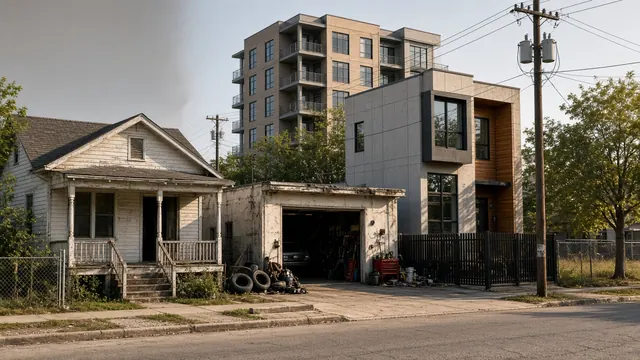
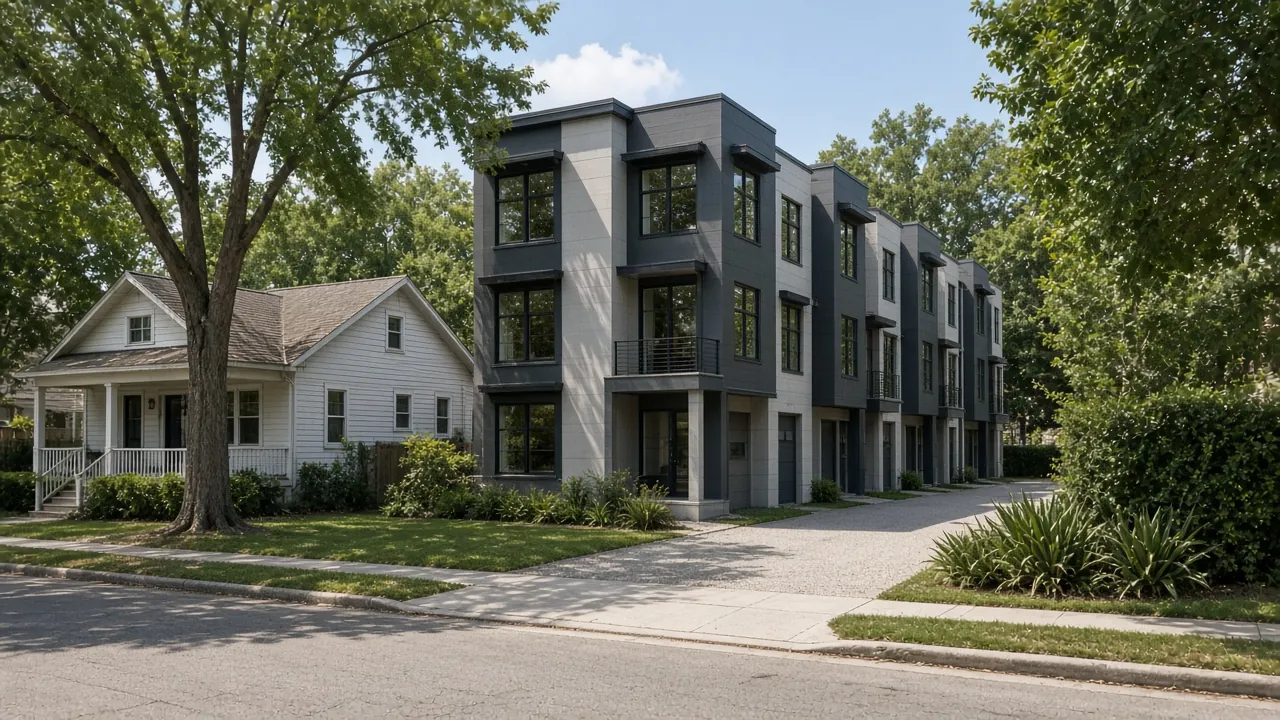
The inner-Loop townhome is one of Houston’s most recognizable housing types. It exists largely because of Chapter 42 of the City of Houston Code of Ordinances, which governs subdivisions and platting, including how small single-family lots can be.
This article is a general overview. Infill developers should work with a surveyor, civil engineer and land use attorney on project specifics.
What Chapter 42 does
Chapter 42 sets standards for:
- Lot sizes and density.
- Building lines (setbacks).
- Street and shared-driveway access.
- Open space requirements.
- Platting and replatting procedures.
Small lots
Chapter 42 allows single-family lots well below typical suburban sizes in much of the city (as small as a few thousand square feet, and in some cases smaller) subject to conditions such as compensating open space and access requirements. This flexibility is what makes three-story townhome clusters on former single-family lots possible.
Shared driveways and newer housing types
Many townhome developments use shared driveways, with access easements and maintenance agreements recorded with the plat. The city has also updated its rules in recent years to encourage additional housing forms, such as courtyard-style developments. Check the current ordinance for the latest options.
Limits on small-lot development
- Deed restrictions may prohibit subdividing lots or limit building types.
- Special minimum lot size and special building line areas let some neighborhoods protect existing lot patterns.
- Historic districts add design review.
- Floodplain rules (Chapter 19) affect elevation and design.
- Detention and drainage requirements apply.
The infill development process
- Identify a site and review title, deed restrictions and special areas.
- Run a yield study: how many lots fit, and how they will be accessed.
- Evaluate detention, utilities and floodplain.
- Replat as needed.
- Design product for the target buyer.
- Build and sell, often while still under construction.
Frequently asked questions
How small can a lot be in Houston?
Chapter 42 allows small single-family lots in much of the city, subject to open space, access and other conditions.
Can deed restrictions block townhome development?
Yes. Deed restrictions and special minimum lot size areas can prevent subdividing.
Do I need to replat to build townhomes?
Usually, yes. Creating new lots requires platting or replatting.
How we help
We help infill builders find and underwrite sites, then list and sell the homes. Learn about our development acquisitions and builder listing program. We recently sold an inner-Loop lot in Upper Kirby. See our track record.
Have a deal or question in mind?
Talk it through with Apurva. A 20-minute call is usually enough to know your next step.