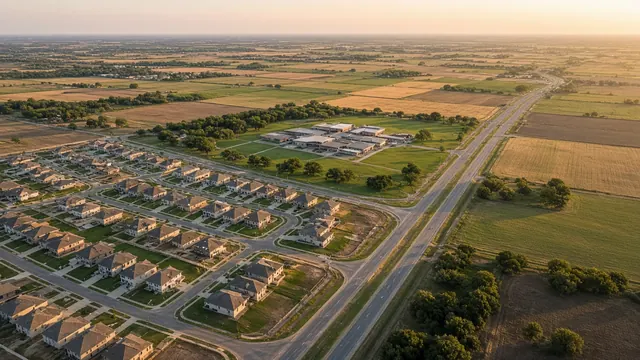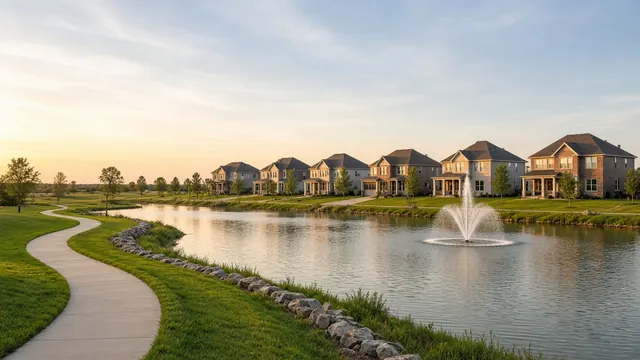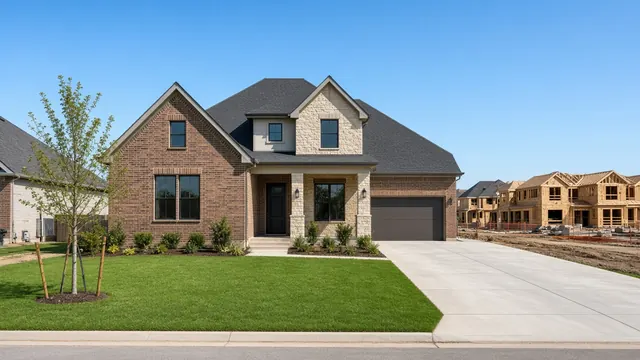
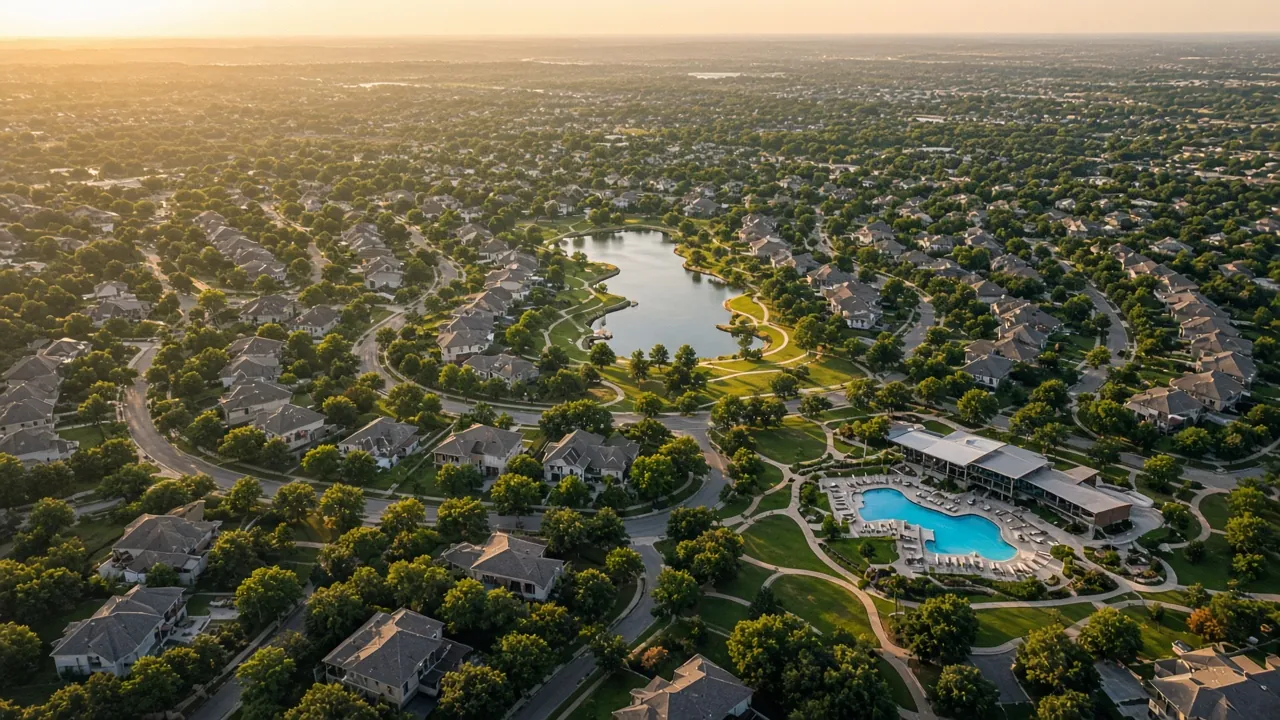
Greater Houston is one of the most active new-home markets in the United States, and much of that construction happens inside master-planned communities, large, developer-controlled neighborhoods with their own amenity centers, trails, schools, retail and, very often, their own special taxing districts.
For buyers, that’s good news: lots of choice, lots of inventory, and builders competing for your contract. It also means comparing communities is harder than it looks. Two homes at the same price, twenty minutes apart, can carry very different monthly costs and very different long-term value.
Here is how we help clients compare Houston master-planned communities.
The major Houston master-planned communities by area
These are some of the communities our buyers ask about most. The list is not exhaustive, and every community is a trademark of its developer.
- Northwest / Cypress: Bridgeland, Towne Lake, and newer communities along the 290 and Grand Parkway corridors.
- West / Katy and Fulshear: Cross Creek Ranch, Jordan Ranch, Tamarron, Cane Island, Elyson and Sunterra.
- Southwest / Fort Bend: Sienna (Missouri City) and Harvest Green (Richmond).
- South / Brazoria County: Meridiana (Iowa Colony) and Pomona (Manvel).
- North / Montgomery County: The Woodlands and newer communities such as Artavia and Grand Central Park in Conroe and Woodforest in Montgomery.
- Northeast: Balmoral (Humble) and growth around Generation Park.
1. Start with the commute you will actually drive
Master-planned communities tend to sit at the edge of the region because that is where large tracts of land are available. The Grand Parkway (SH 99) has opened up much of that land, but a community that feels close on a Saturday can be a long drive on a weekday. Test the drive at rush hour: to work, to school, and to the places you go weekly.
2. Compare the total tax rate, not just the price
This is the single biggest blind spot we see. Many new communities sit inside Municipal Utility Districts (MUDs) or other special districts that finance water, sewer, drainage and roads. Those districts levy taxes on top of county, city, school and other rates. It is not unusual for combined rates in new communities to approach or exceed 3% of assessed value.
On a $450,000 home, a one-percentage-point difference in total tax rate is roughly $4,500 a year, about $375 a month. That can matter more than a $15,000 price difference. Read our deeper explainer on MUD taxes in Houston new construction.
3. Look at HOA dues and what they buy
Dues fund the amenities that make master-planned communities attractive: pools, lakes, trails, fitness centers, events and landscaping. Higher dues are not automatically bad, but compare what you get. Ask for the current budget and whether any special assessments are planned.
4. Understand the school picture
Communities can straddle more than one school district, and attendance zones for new schools can change as communities grow. Verify the specific address with the district rather than relying on marketing materials.
5. Study the builder lineup
Most communities host several builders across price points. The same lot size can carry very different construction quality, standard features and warranty terms depending on the builder. We compare builders inside a community the same way we compare communities across the region.
6. Think about resale from day one
As long as a community is still selling new homes, your eventual resale competes with the builder’s inventory and incentives. That is not a reason to avoid a growing community, but it is a reason to choose lots and floor plans that will stand out: interior lots on quiet streets, good orientation, and practical layouts usually hold value best.
7. Check the lot itself
Drainage, what the lot backs to, future road or commercial development nearby, pipeline easements and lot premiums all matter. See our guide to new construction flood risk and lot selection.
Frequently asked questions
What is the best master-planned community in Houston?
There isn’t one best community. The right choice depends on your commute, budget, school priorities and tolerance for tax rates. We compare communities side by side on total monthly cost, drive times and builder quality before recommending a short-list.
Are master-planned communities in Houston more expensive?
Purchase prices are often competitive, but total costs can be higher because of HOA dues and MUD or PID taxes. Compare total monthly payment, not list price.
Can I use an agent to buy in a master-planned community?
Yes. Most builders work with buyer’s agents and pay cooperating compensation, but many require the agent to register you on your first visit.
How we help
Matador Realty Group represents buyers in builders’ sales offices across Greater Houston. We build a side-by-side comparison of communities (price, total tax rate, HOA, commute, schools and builder quality) and then negotiate incentives and manage inspections through closing. In most communities, the builder pays our fee. Learn more about our new construction buyer program.
Have a deal or question in mind?
Talk it through with Apurva. A 20-minute call is usually enough to know your next step.