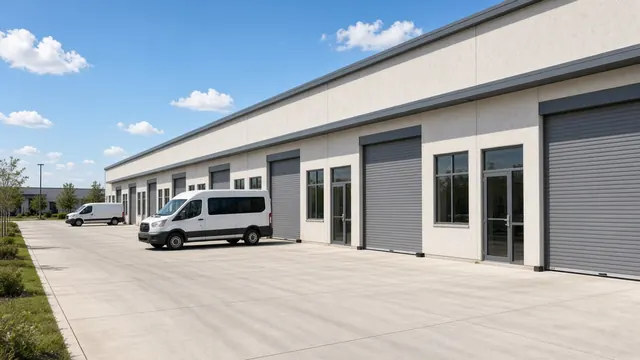
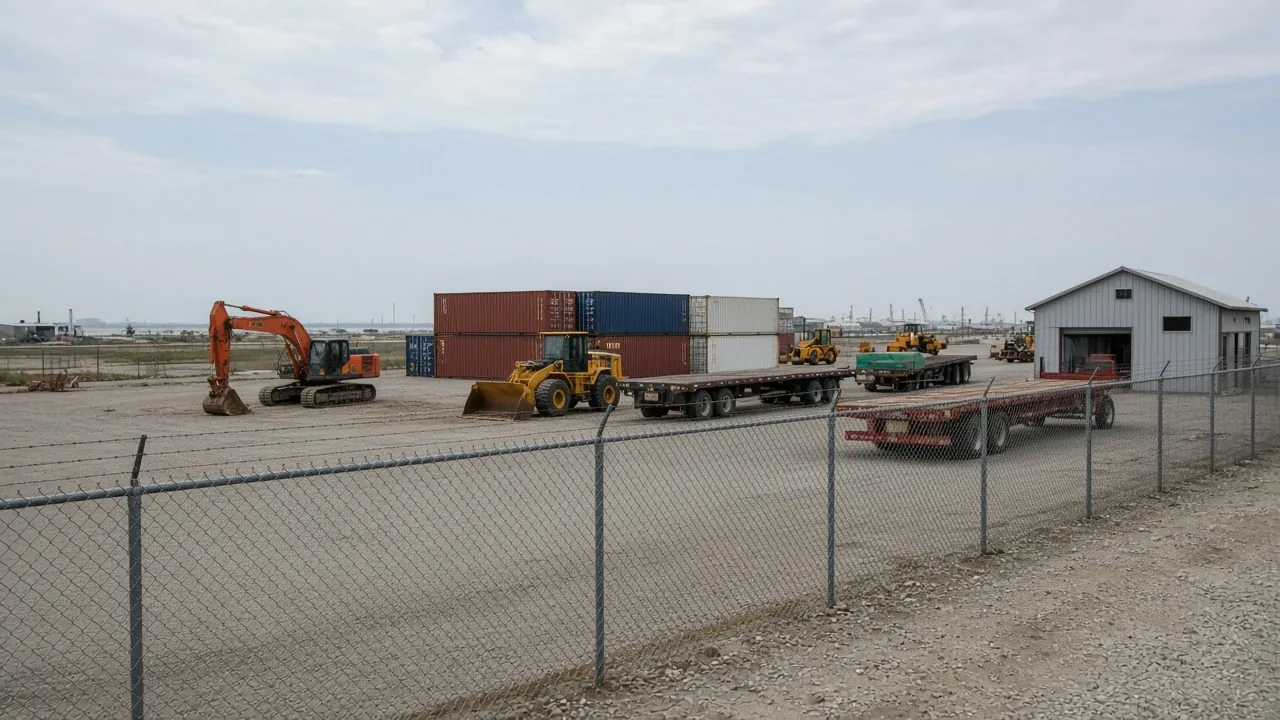
Not every industrial user needs a big building. Trucking companies need parking. Equipment rental companies need yards. Contractors, pipe suppliers and energy services firms need laydown areas. These users drive demand for industrial outdoor storage (IOS): land, often with a small building or shop, used primarily for outdoor storage and vehicle parking.
Why IOS matters in Houston
Houston’s economy is heavy on exactly the industries that need outdoor space: logistics, energy, petrochemicals, construction and port-related businesses. At the same time, suitable sites are limited: many cities restrict outdoor storage, and land near highways and the port is increasingly developed.
What makes a good IOS site
- Location near highways, the port, rail or industrial clusters.
- Surfacing: stabilized gravel, crushed concrete or paving that can handle heavy loads.
- Drainage and detention, which become expensive on large impervious surfaces.
- Ingress and egress suitable for trucks and trailers.
- Security: fencing, gates, lighting and cameras.
- Utilities and building improvements for office, maintenance or wash-out.
- Permitted use: deed restrictions, city regulations and any suburban zoning.
Tenants and leases
IOS tenants range from local contractors to national logistics and equipment companies. Leases may be shorter than typical warehouse leases, so credit and history matter. Watch for environmental risks from fuel storage, vehicle maintenance and materials.
Diligence checklist
- Phase I environmental site assessment (and Phase II if warranted).
- Survey, easements and pipelines.
- Floodplain and drainage review.
- Permitted-use confirmation.
- Condition of surfacing and improvements.
- Tenant financials and operations.
- Property tax and insurance projections.
Development and conversion
Some investors create IOS from raw land by adding surfacing, fencing, utilities and a small shop. Detention and drainage design are often the biggest variables in cost.
Frequently asked questions
What is IOS in real estate?
Industrial outdoor storage is land used primarily for truck parking, equipment, containers or laydown, often with a small building.
Why is IOS in demand in Houston?
Logistics, energy, construction and port businesses need outdoor space, and suitable sites are limited.
What surface is needed for an IOS yard?
Typically stabilized gravel, crushed concrete or paving rated for heavy vehicles, plus proper drainage.
How we help
We help investors and users find, evaluate and lease IOS sites across Houston. Learn about our industrial and land practices.
Have a deal or question in mind?
Talk it through with Apurva. A 20-minute call is usually enough to know your next step.