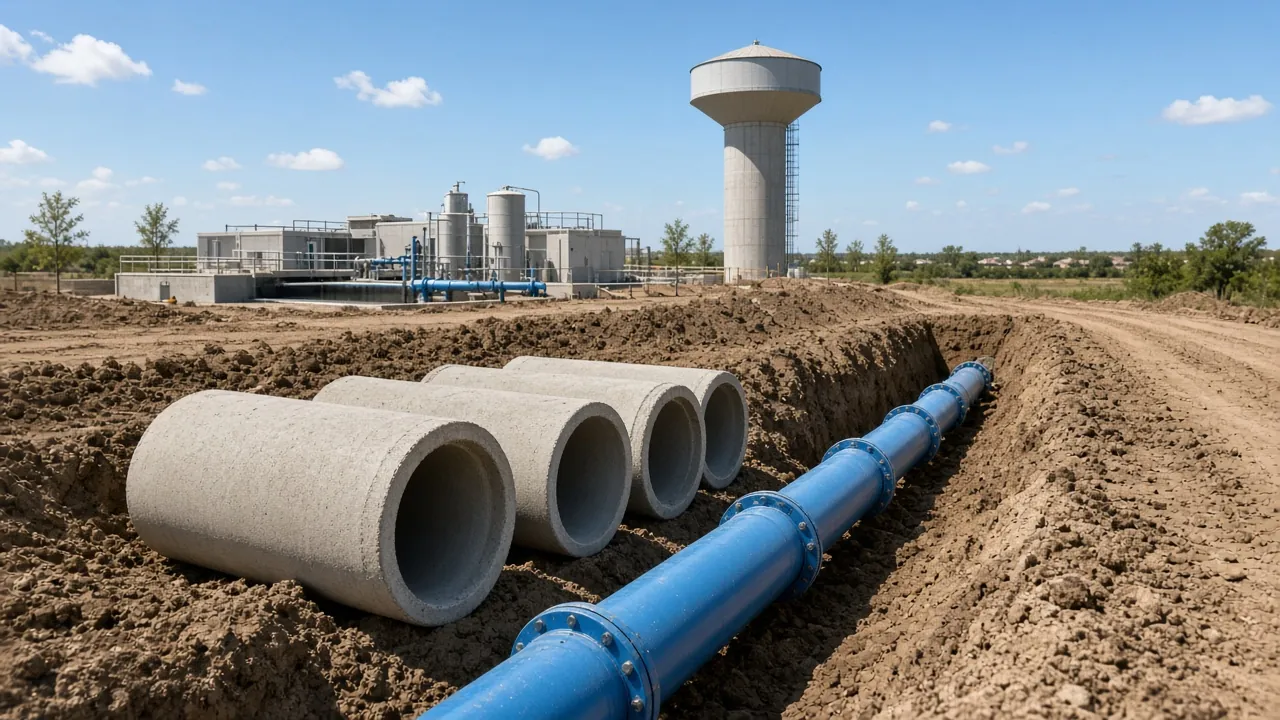
Much of suburban Houston would not exist in its current form without Municipal Utility Districts. For developers and land investors, understanding how MUDs work is essential to understanding land value outside the city’s core.
The basic model
- A developer acquires land outside existing utility service areas.
- A MUD is created, by the Texas Commission on Environmental Quality (TCEQ) or by legislative action, to provide water, sewer and drainage (and sometimes roads, parks and recreation).
- The developer advances funds to build infrastructure.
- As homes and commercial buildings are built and assessed value grows, the MUD issues voter-approved bonds and reimburses the developer for eligible costs.
- Property owners in the district repay the bonds through MUD taxes.
Why it matters for land value
MUD financing allows infrastructure costs to be repaid over time by future property owners rather than paid entirely up front by the developer. That makes large-scale development feasible and affects what developers can pay for land.
Key risks for developers
- Timing: reimbursement depends on growth in taxable value, which depends on home sales and construction pace.
- Reimbursable vs. non-reimbursable costs: not every cost qualifies.
- Market risk: slower absorption delays bond issuance.
- Tax rate competitiveness: high MUD rates can make a community less attractive to buyers. See MUD taxes for buyers.
What land buyers should ask
- Is the land in an existing MUD or other district?
- Is there capacity in the district’s water and sewer plants?
- What is the district’s outstanding debt and tax rate?
- Is there a development agreement with a city or county?
- Could the land be annexed into an existing district?
Commercial land in MUDs
Commercial tracts within MUDs contribute significantly to the tax base and are often valuable to the district. Understand how commercial development affects district finances.
Frequently asked questions
Who creates a MUD?
MUDs are created through the Texas Commission on Environmental Quality or by legislative action.
How do developers get reimbursed?
The MUD issues voter-approved bonds as taxable value grows and reimburses eligible infrastructure costs.
Can commercial land be in a MUD?
Yes. Commercial property contributes significantly to a district’s tax base.
How we help
We help developers and land investors evaluate districts, utilities and infrastructure as part of acquisition diligence. Learn about our land and development practices.
Have a deal or question in mind?
Talk it through with Apurva. A 20-minute call is usually enough to know your next step.